BACK
BACK


August 13, 2026

When people think of marine life in the Salish Sea, whales, orcas, and playful sea lions usually come to mind. Yet beneath the waves, another mysterious and mesmerizing creature drifts gracefully in the currents: the jellyfish. These ancient animals, some of which have existed for over 500 million years, play an important role in the Salish Sea ecosystem and add to the region’s remarkable biodiversity.
A Drifting Life
Unlike fish, jellyfish are not strong swimmers. They move mostly by drifting with the ocean’s currents, pulsing their bell-shaped bodies only enough to help steer or rise and fall in the water column. Their delicate appearance often makes them seem otherworldly, yet they are highly adapted survivors. Some jellyfish thrive in areas where other species struggle, including low-oxygen waters.
Jellyfish Species in the Salish Sea
The waters off British Columbia host several species of jellyfish, each with its own striking features:
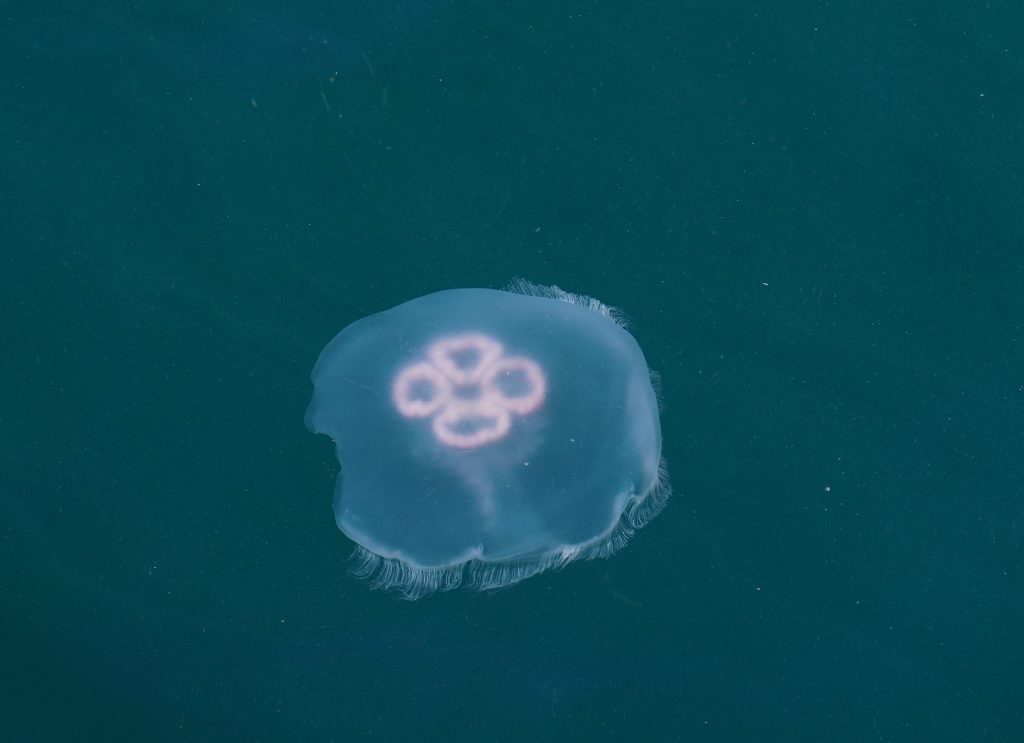
Moon Jelly (Aurelia labiata)
Perhaps the most familiar jellyfish in the Salish Sea, the moon jelly is almost transparent with four distinctive horseshoe-shaped gonads visible through its bell. They often appear in large blooms during the warmer months and are harmless to humans, delivering only a very mild sting.
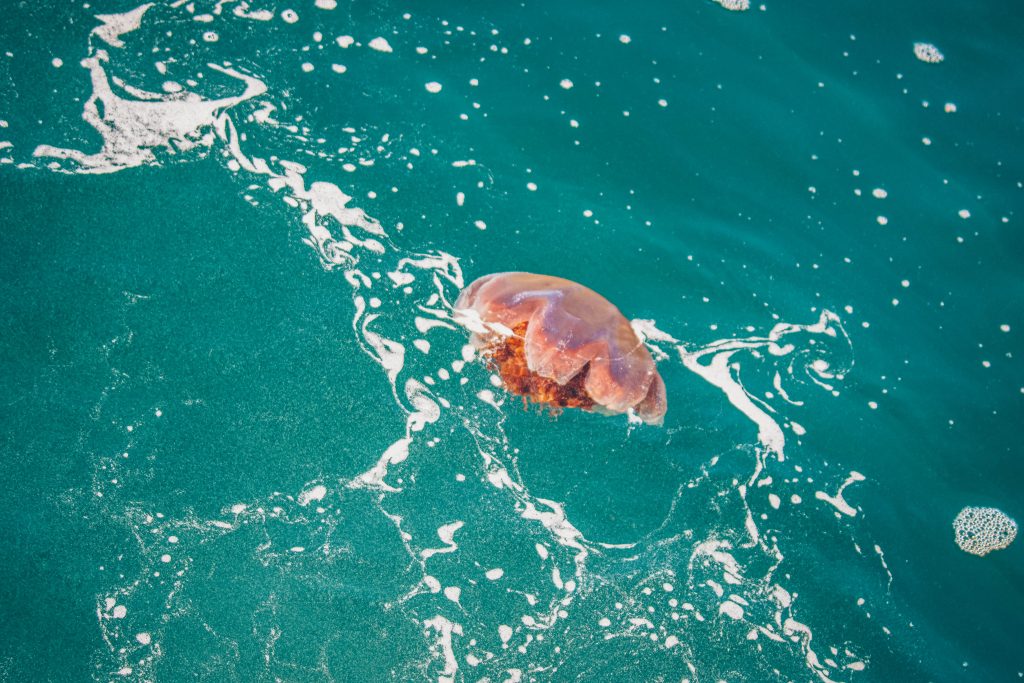
Lion’s Mane Jellyfish (Cyanea capillata)
The lion’s mane is the world’s largest jellyfish, and it can sometimes be spotted in the Salish Sea. Its bell can reach over two metres across, with tentacles stretching more than 30 metres in length. These tentacles contain stinging cells that capture plankton, small fish, and other prey. Despite their size and sting, lion’s mane jellyfish are a fascinating and beautiful sight.
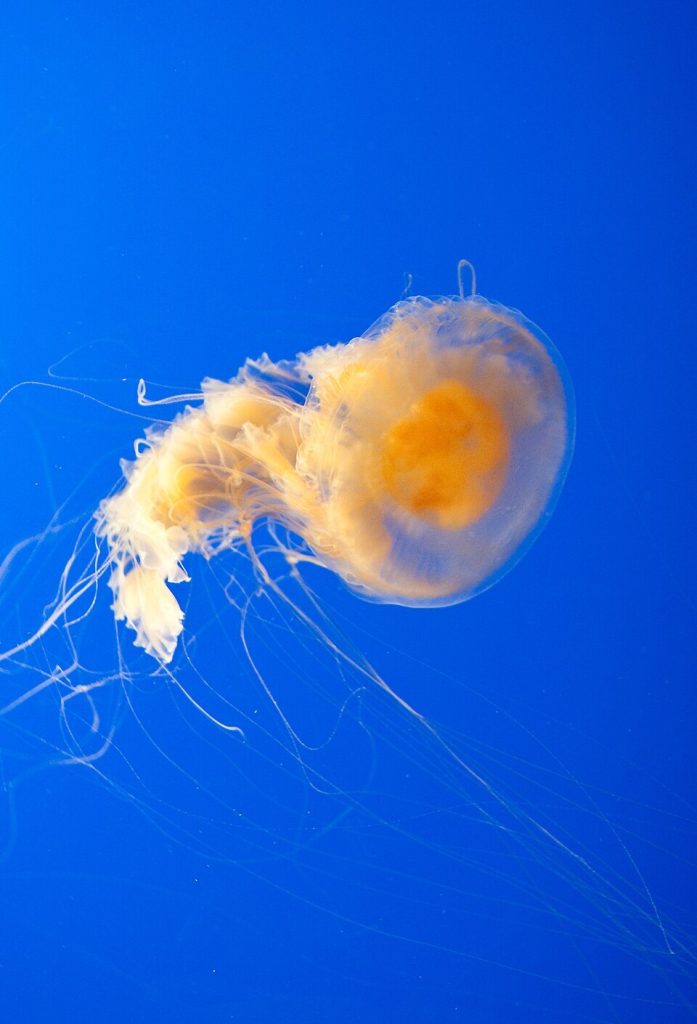
Fried Egg Jellyfish (Phacellophora camtschatica)
Named for its appearance, the fried egg jellyfish has a yellowish bell with a white rim that makes it look like a sunny-side-up egg floating in the sea. Despite their size, sometimes over 60 cm across, their sting is weak, and they are often seen carrying small fish or crabs among their tentacles, which use the jellyfish for shelter.
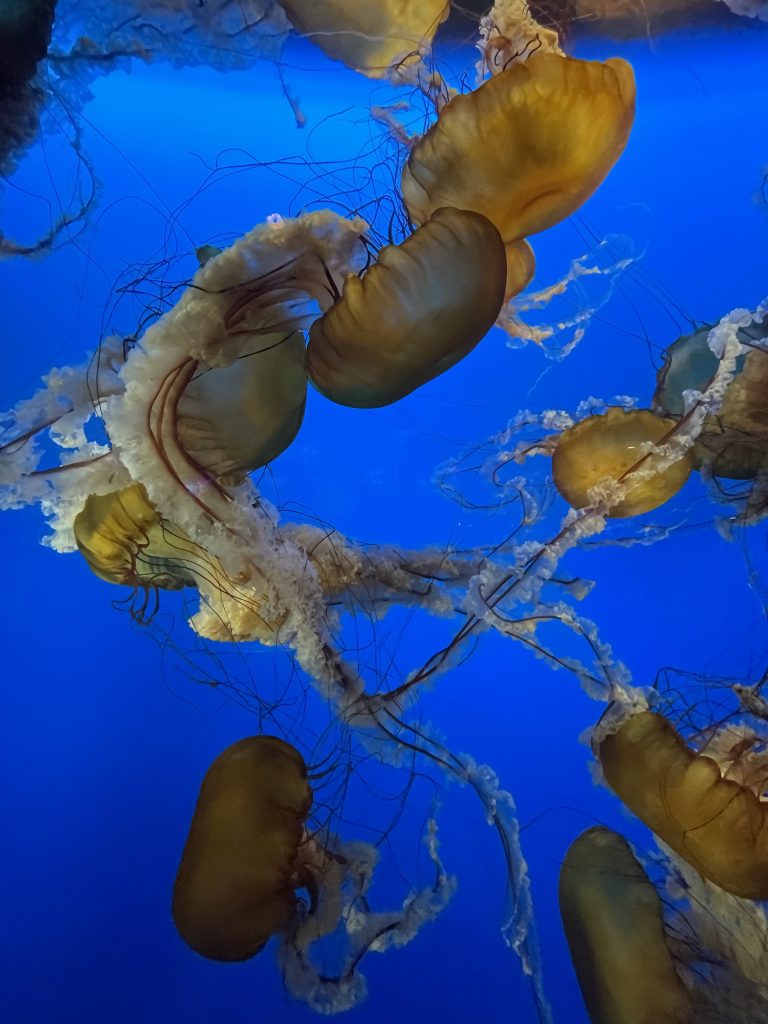
Sea Nettle (Chrysaora fuscescens)
This striking jellyfish has a reddish-brown bell and long, flowing tentacles. Their sting is more noticeable than that of the moon jelly but is generally not dangerous to humans. They are active hunters, capturing plankton and small fish as they drift.
Why Jellyfish Matter
Jellyfish play an essential role in the Salish Sea ecosystem. They are both predator and prey, feeding on plankton, small fish, and larvae, while also serving as a food source for seabirds, larger fish, and even some species of turtles that wander into the region. Their population dynamics can also reveal changes in the marine environment, such as warming waters or shifts in prey availability.
Spotting Jellyfish on Your Adventure
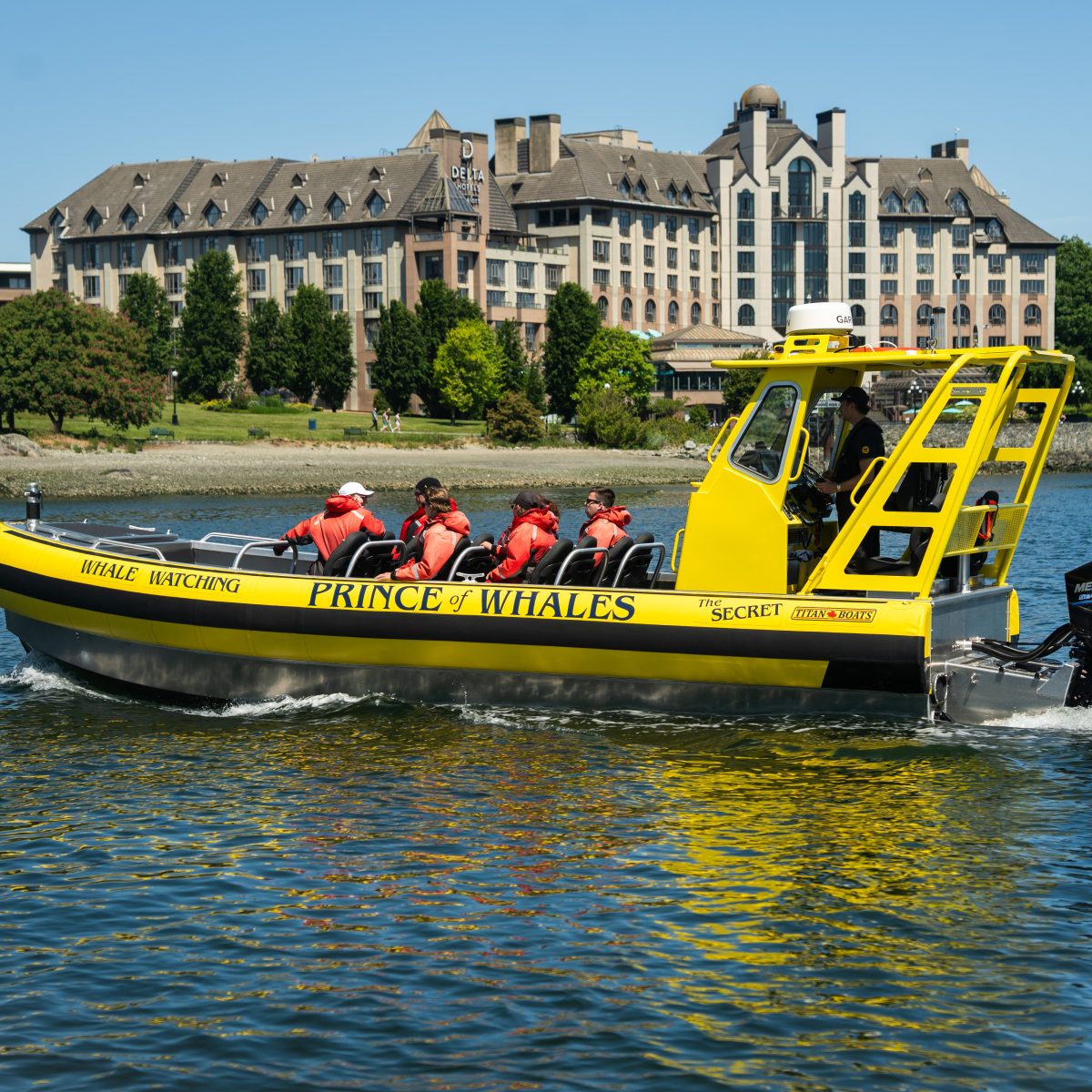
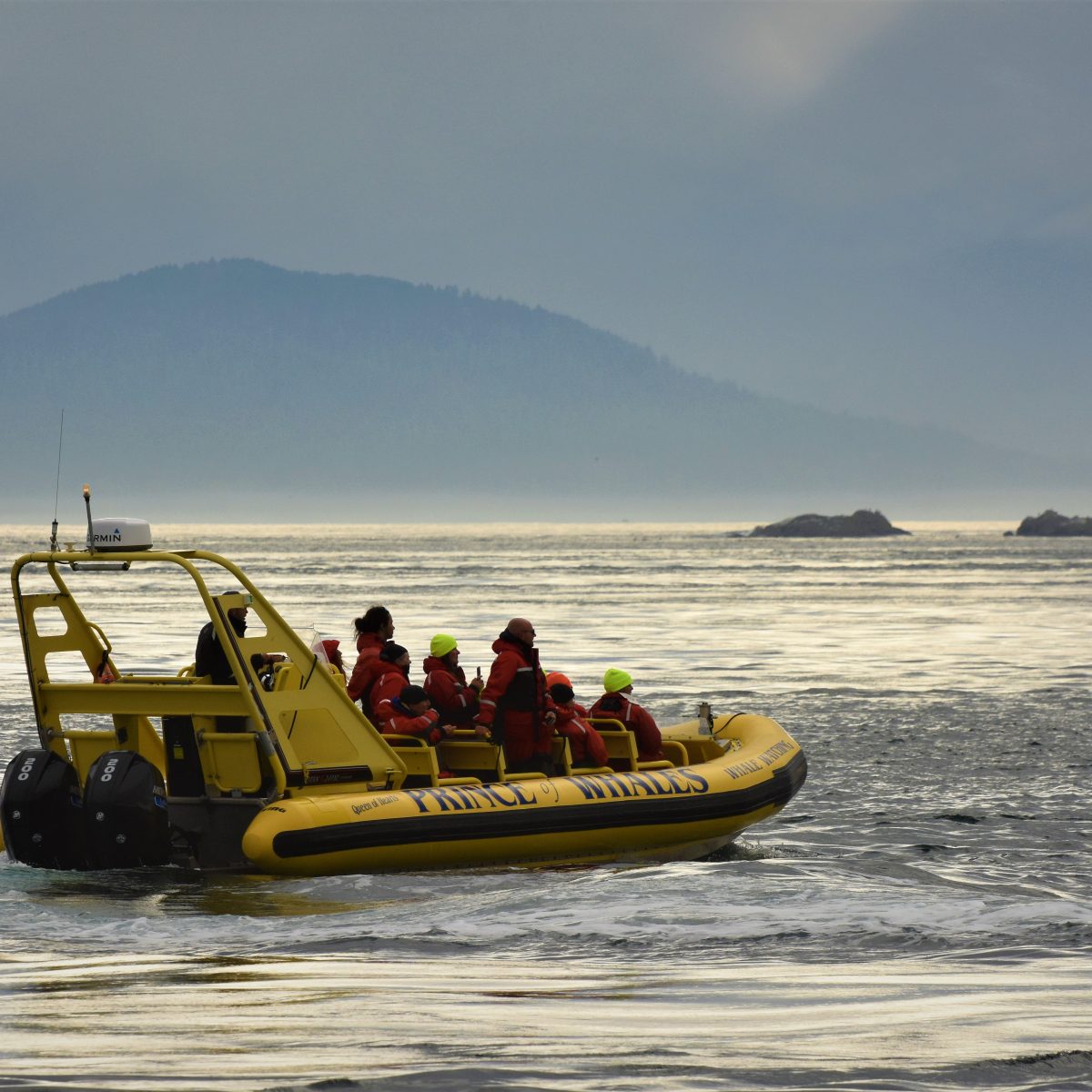
On a Prince of Whales tour, guests may occasionally spot jellyfish pulsing just below the surface, especially during late spring and summer when blooms are more common. While whales and other marine mammals often steal the spotlight, pausing to admire these delicate drifters reminds us of the incredible diversity of life in the Salish Sea!